
AI in the boardroom
The Meaning of Your Life: What AI Leaves to Us
Arthur C. Brooks's The Meaning of Your Life is not a business book. But its argument about the two halves of the brain offers one of the clearest lenses I have found on what AI will, and will not, take from leaders.
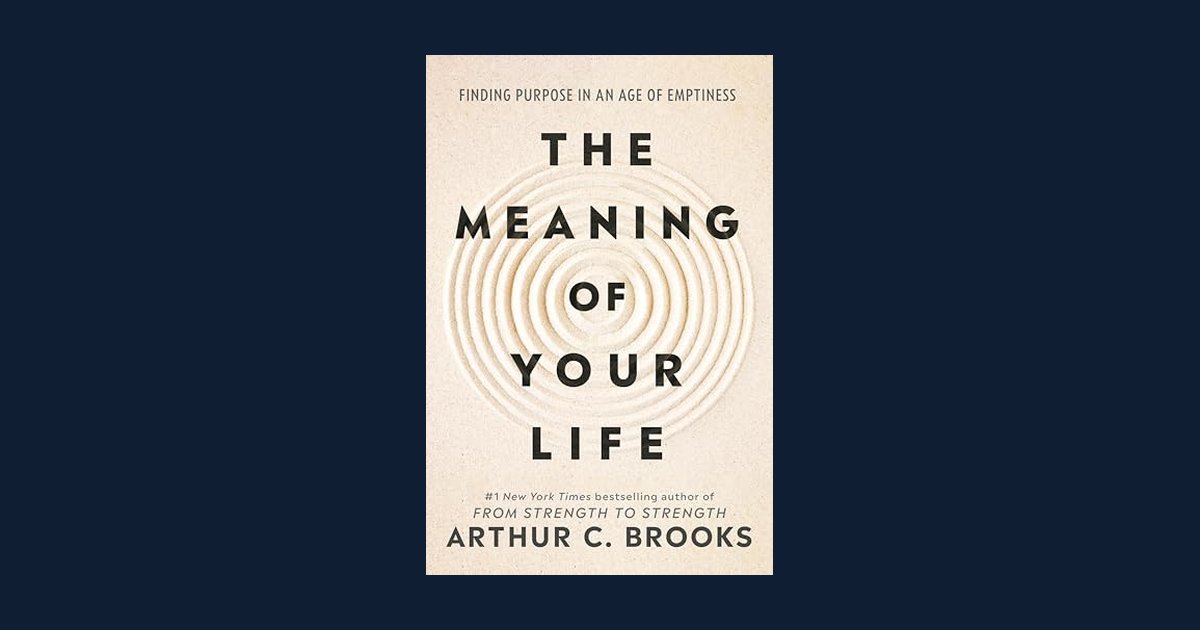
The Meaning of Your Life is not a business book, and I did not expect to write about it here.
Arthur C. Brooks teaches at Harvard and writes about happiness for a living. This book asks where meaning comes from, and why so many successful people struggle to find it. His answer turns out to be one of the clearest lenses I have found on what AI will change about leadership.
A crisis among achievers
Brooks starts from a crisis of meaning, especially among young people doing everything they were told would lead to a good life.
He is sharpest about high achievers. Ambition and constant busyness, he suggests, work as an anaesthetic that keeps us from asking uncomfortable questions. And when the goal is finally reached, the promotion or the exit or the title, arriving often feels surprisingly empty. Anyone who has spent time around senior executives will recognise the pattern.
He breaks meaning into three parts: coherence (things happen for understandable reasons), purpose (a sense of direction) and significance (your life matters, and to whom). A career can supply purpose in abundance and very little of the other two.
Two halves of the brain
The central argument draws on the psychiatrist Iain McGilchrist. The left hemisphere deals with the “how” and the “what”: tasks, process, getting things done. The right deals with the “why”: relationships, context, beauty and judgement. Meaning, in Brooks’s view, lives on the right.
Screens, hustle culture and the constant measurement of achievement keep us on the left. We get better at how and what, and lose touch with why.
What AI changes
This is the part that caught my attention.
For a very long time, the people who rose to the top were exceptional left-brain operators. They finished tasks, mastered process and got things done. That is what organisations selected for and rewarded.
It is also exactly the work AI is becoming very good at. Brooks has described AI as “a how-to and what engine, but it’s not a why engine”.
If he is right, what sets leaders apart is shifting towards judgement, empathy, the ability to bring people together and to decide what matters. It is one reason why, in a world of video calls and AI tools, being physically present seems to matter more, not less.
It also shapes how I use AI. I use it as hard as I can for the mundane, procedural work, to free up time for the thinking it cannot do. The real risk is the opposite: a leader who spends the day rubber-stamping AI output is not exercising judgement, just supervising a faster left hemisphere.
The limits of the book
The book is more religious than I expected. Brooks is open about his faith, and many readers will value it, but anyone looking for a purely secular argument will notice.
The science needs care too. McGilchrist’s account of the hemispheres is contested among neuroscientists, and is best read as a powerful metaphor rather than settled fact. And it is a book about your life: it says little about the institutions and working conditions that supply meaning, or drain it.
Choosing leaders for the why
If AI takes over much of the task work, three things follow for directors.
First, it changes what we select employees and leaders for. Succession plans still reward the superb operator. We should look just as hard for judgement, relationships and the ability to create meaning for others.
Second, it raises the question of how the next generation will develop judgement, if AI does the junior task work through which most of us built ours.
Third, it applies to the board itself. AI will soon draft much of what boards read. The board’s job will be less about absorbing information and more about the “why”: what the company is for and what it will not do.
AI will take the tasks. The question is whether we use the time it gives back for the things only people can do.
Distribution list
Be told when a new essay is published
Join the distribution list for occasional notes on governance, boards, AI, healthcare and growth capital. No marketing — just new essays.